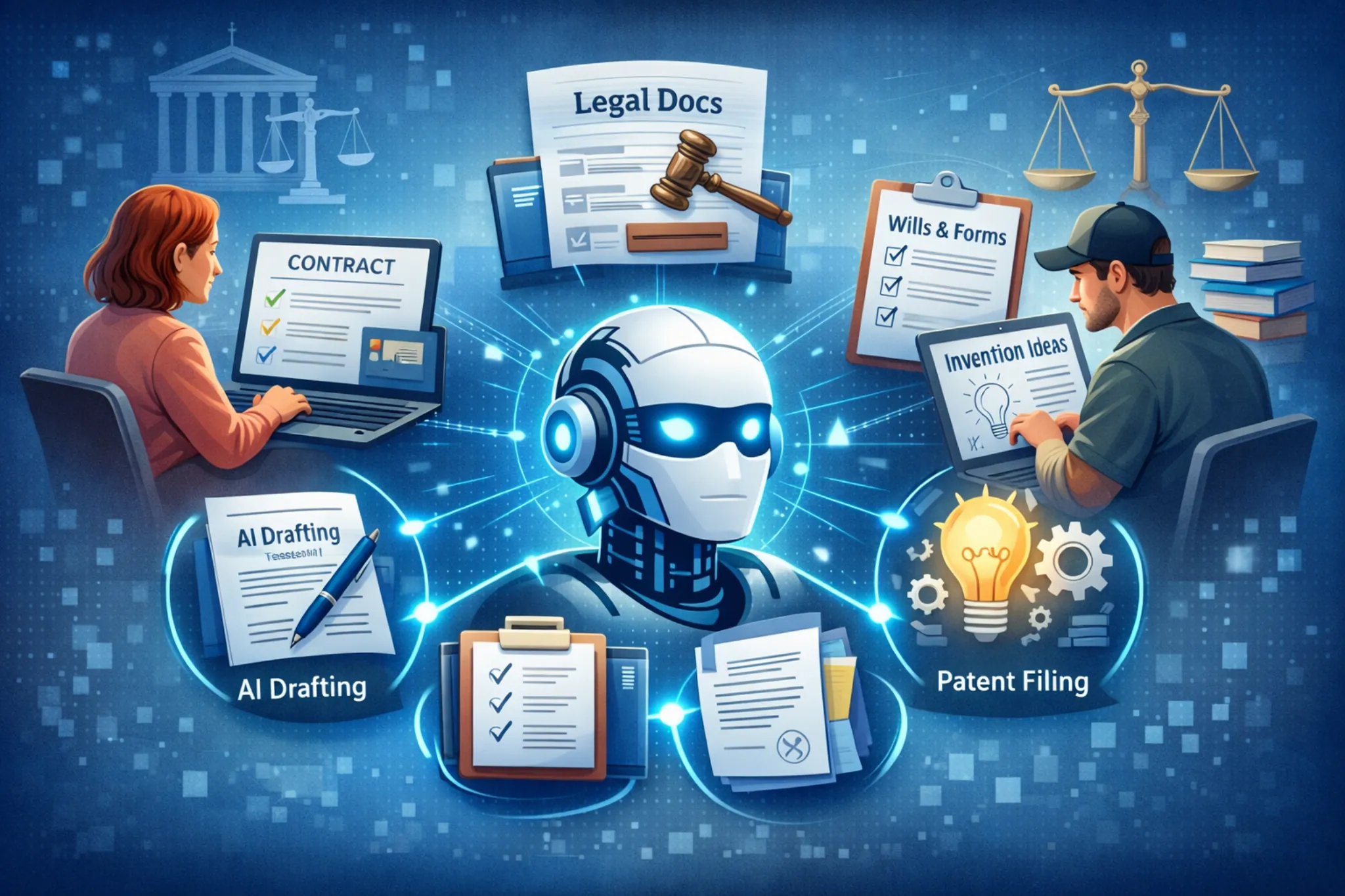
Generative AI Tools for Non-Attorney Legal Document Preparation
Generative artificial intelligence has increasingly been applied to legal workflows, with early adoption largely focused on tools designed for use by licensed attorneys. These systems commonly assist with tasks such as legal research, document review, drafting support, and procedural analysis. Many established legal information providers, including Thomson Reuters, Westlaw, and LexisNexis, have integrated AI-assisted drafting, research, and document automation features into platforms intended for use by legal professionals.
In parallel, a growing category of generative AI tools has emerged that is intended for non-attorney users seeking to independently prepare, organize, or assist with the creation of legal and quasi-legal documents. Such tools are now commonly used to generate or support documents including contracts, non-disclosure agreements, wills, powers of attorney, corporate formation materials, and other standardized legal instruments. These platforms typically rely on guided questionnaires, structured templates, and AI-driven text generation to produce documents tailored to user inputs, often without direct attorney involvement.
More recently, similar approaches have been applied to patent-related documentation. One example is Idea2PatentAI, which has developed an AI-assisted patent drafting platform that uses a structured workflow and automated drafting techniques to help non-attorney users prepare provisional patent application materials. In jurisdictions such as the United States, where provisional applications permit reduced formal requirements, these tools aim to assist users in describing inventions in sufficient technical detail to support a future non-provisional filing.
For a detailed overview of how AI is used specifically to develop and prepare patent applications, see our AI Patent Drafting: The Complete Guide.
The use of generative AI tools by non-attorneys raises important considerations. Because these systems are designed to operate without direct attorney involvement, users must remain cautious regarding legal accuracy, strategic decision-making, and compliance with jurisdiction-specific requirements. Most platforms explicitly avoid providing legal advice and emphasize that outputs are informational or preparatory in nature, leaving responsibility for legal sufficiency and downstream decisions with the user.
Nevertheless, for many individuals, startups, and early-stage companies operating under budget constraints, such tools may represent a practical option where traditional legal services are inaccessible or cost-prohibitive. In this sense, non-attorney generative AI tools can function as an intermediate resource—reducing barriers to entry, improving documentation quality, and supporting more informed engagement with legal professionals when such engagement becomes feasible. Their continued development reflects broader trends toward democratizing access to legal and technical resources through automation and intelligent systems.
Article Information
By Idea2PatentAI Editorial Team
Reviewed by U.S. Patent Attorney (16+ years of experience)
Last updated:
Related Articles:
Editorial Standards
This article is prepared by the Idea2PatentAI editorial team and reviewed for technical accuracy by a U.S. Patent Attorney. It is provided for educational purposes only and does not constitute legal advice. Reading this article or using Idea2PatentAI does not create an attorney-client relationship. For advice regarding your specific situation, consult a qualified attorney.
We aim to keep our content current and accurate; however, laws, regulations, and USPTO practices can change. If you believe this page contains an error, please contact us. For more information about our content standards, visit our Editorial Policy.
DISCLAIMER NOTICE: The Idea2PatentAI blog is provided for informational purposes only. Idea2PatentAI is not a law firm and nothing on this website constitutes legal advice. Users are encouraged to consult with qualified patent attorneys or other legal professionals for legal guidance or questions.